TITLE :“Reconocimiento y acciones federativas respecto de los Atletas de Elite luego de su etapa Deportiva”
Introducción
“Recognition and Asociations actions Reconocimiento y acciones federativas respecto de los Atletas de Elite luego de su etapa Deportiva”
A modo de introducción a este tema enunciado arriba, hago conocer un pensamiento y reflexión sobre el mismo.
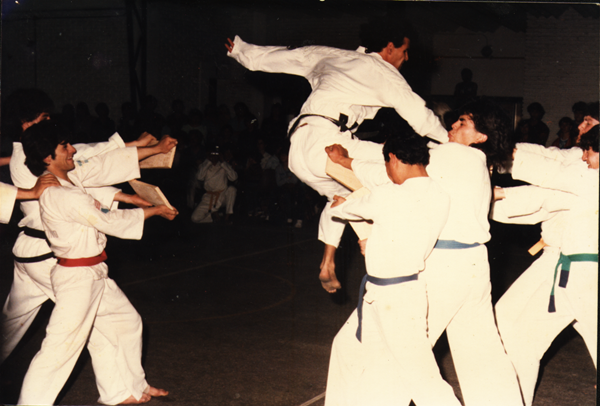
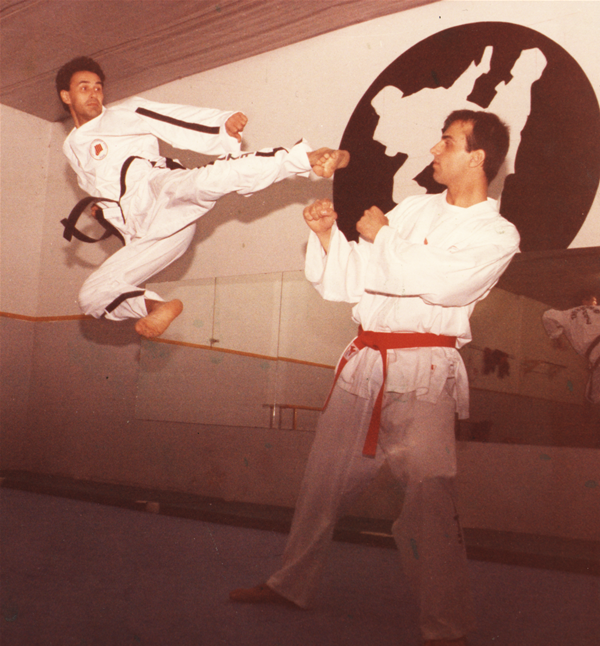
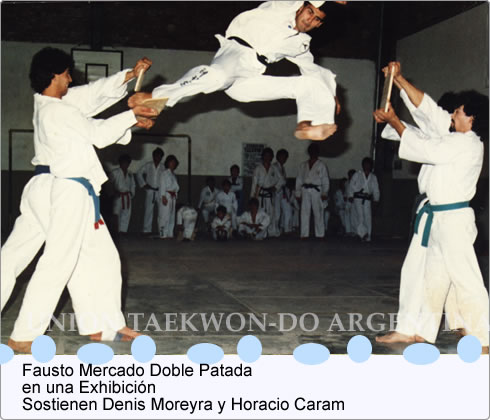
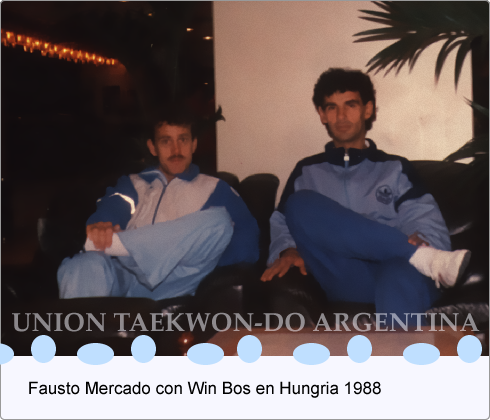
A lo largo de toda mi carrera dentro del Taekwon-Do itf e logrado varias cosas en lo personal y profesional, y dentro de esta carrera no quedó al margen una vida deportiva, de un atleta que se desarrollo en el ámbito nacional e internacional, siendo campeón nacional individual varias veces y por equipos también, pero mi mayor orgullo de ambos ámbitos fue el integrar en varias oportunidades la selección nacional junto a grandes exponentes mundialistas y así como grandes coaches, hoy Grand Masters algunos y figuras internacionales dentro de nuestra itf hoy.
He podido acumular experiencia en la vida deportiva sacrificada, de mucho esfuerzo y perseverancia ante las adversidades para poder llegar a todas las instancias de la carrera deportiva mencionada, descubriendo inclusive como lograr mantenerme dentro del ambito por varios años y después acompañando por décadas a colegas y alumnos. Pero hoy no encuentro proyectos ó programas que acompañen al deportista de elite mundialista con logros después de mas de 45 años del deporte mundial itf. Solo me permito reflexionar y de cara al futuro ,que puedo aportar con esta reflexion para colaborar con mi dedicación y pasión hacia esta tan preciada actividad y arte ?
Aquí dejo esta reflexión plasmada en mi tesis para simplemente colaborar en mejorar la vida de tantos atletas que tantas alegrías nos regalan con su esfuerzo, dedicación y pasión por la faceta deportiva del atleta de Taekwon-Do itf nacional.
Mi más profundo respeto a toda la comunidad deportiva del Taekwon-Do ITF.
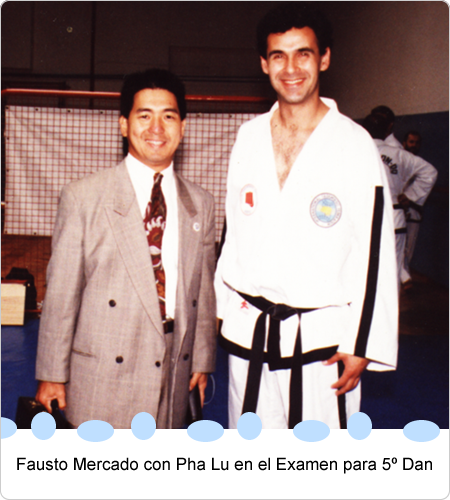
Master Fausto Mercado VIII DAN – ITF Argentina
Fundamentación:
Considerando que durante el periodo de tiempo que va, aproximadamente, desde los años 70 del siglo pasado a los primeros años del corriente milenio, se ha creado un semillero de competidores, pioneros, destacados deportistas; una cuna de campeones mundiales que hoy se han consagrado con múltiples títulos en las distintas modalidades de competencia deportiva de nuestro Arte. Y teniendo en cuanta que algunos de esos competidores hoy son Maestros o Grandes Maestros, que encontraron un lugar en sus carreras en el TaeKwon-Do, pero, sin perder de vista tampoco, que muchos de ellos, tan destacados como los anteriores, se quedaron fuera del Taekwon-do al no encontrar un camino alternativo dentro de él. Muchos se han sentido cansados o desilusionados por diversos motivos, motivos que, si bien diferentes, resultan muy parecidos en sus bases, generando de esta manera que hayan abandonado la practica o pasado a otra disciplina.
Sumando a lo anterior, y convencidos de que es, o debería ser, de nuestro especial interés federativo, encontrar un lugar, generar las formas de dar un reconocimiento y permitir a estos competidores seguir desarrollándose y colaborar con el desarrollo de TaeKwon-Do. Brindando a las nuevas generaciones tanta experiencia recogida en tan ricas trayectorias, no solo desde lo deportivo, sino desde lo marcial y humano, es que se desarrolla el presente trabajo, en el cual se pretende ahondar y apreciar la realidad de muchos atletas y, convencidos de la necesidad de que la ITF busque manera de implementar políticas de reconocimientos, apoyo, así como otras estrategias que permitan lograr, tanto desde cada asociación, Federación Nacional, regional, o sobre todo desde la propia ITF como gobierno internacional, que se articulen las medidas para poder de esta manera devolver algo de todo lo que han brindado estos deportistas como atletas, al Taekwon-Do en general y a la ITF en particular.
Antes de progresar cabe destacar que el objetivo del presente trabajo es el de visualizar posibles acciones que permitan alcanzar estas estrategias, sin que esto signifique una prescripción, ni mucho menos un proyecto en si mismo, sino simplemente la visualización de posibles herramientas que en este momento o bien no se utilizan, o se utilizan in adecuadamente o, cuando menos, no son percibidas por los atletas como debidamente implementadas. Para de esta manera, conscientes de esta realidad, poder, en una futura instancia, desarrollar proyectos propiamente dichos en pos de estas metas.
Metodología:
La metodología implementada se basó en la búsqueda inicialmente de testimonios de atletas de elite con experiencia en competencias nacionales e internacionales de categorías individuales y en equipo (masculino y femenino) que hayan participado en las distintas modalidades y hayan trabajado, estudiado y entrenado a la vez por sus propios medios y otros para poder llegar a cada instancia competitiva por algunos años y en forma sostenida. Los logros obtenidos permiten que los testimonios y experiencias sean mas enriquecedores para este trabajo y pongan bajo la lupa lo expuesto y a la vista los posibles resultado de una nueva visión hacia el futuro de estos atletas y ejemplos de deportistas para toda la comunidad y familia del Taekwon-Do ITF nacional y mundial.
1- Para conseguir la incorporación de este conocimiento las entrevistas se realizaron por diferentes medios (comunicación presencial, telefónica, Chat y correo electrónico) usando principalmente la siguiente guía de preguntas para obtener diversas respuestas de modo de catalogar información de las opiniones y ejemplos para este trabajo.
2- Se reunió información de eventos que enmarcan el nivel de compromiso que cada atleta debe tener para obtener resultados en eventos de carácter mundialista, sea individual y en equipo. (pagina web oficial de ITF.
Articulos que avalan mi thesis y su desarrollo :
Que pasa cuando dejan su faceta deportiva activa ?
El retiro del deportista de elite y su desentrenamiento !!
El deportista de alto rendimiento: apuntes para pensar en su desentrenamiento
(Resumen)
El desentrenamiento deportivo en la actualidad se está abriendo paso en la preparación del deportista, dominado hasta ahora por el entrenamiento, considerado por muchos entrenadores como su único componente y piedra angular en la vida del practicante, sin embargo, el carácter humanista que debe acompañar a su carrera, cobra mayor relevancia con el retiro. Por ello, al ser sometido durante muchos años a la agresión de grandes cargas físicas y psicológicas, sufre modificaciones o bio-adaptaciones para adoptar un estado de salud coherente con su actividad, no obstante, al traspasar la fina línea que separa la condición atleta activo/atleta retirado, esos ajustes orgánicos sin la atención adecuada convierten a ese estado en incoherente, por eso, el desentrenamiento en esa última etapa pasa a ocupar un papel importante, al ser una herramienta esencial, capaz de ayudar al voleibolista retirado, a desacelerar algunos procesos como los relacionados con la actividad cardiaca y la tensión arterial, adaptadas a las respuestas exigentes frente a la estimulación y variación de las magnitudes de las cargas. De eso se trata, reorientar con el desentrenamiento
extremas del entrenamiento o la competencias, empleando el estímulo del ejercicio físico, pero ahora, alejado del rigor impuesto por el “principio del aumento constante y máximo de las carga”, sobre todo, porque la ante demandada elevación permanente del rendimiento deportivo desaparece, para priorizar el retorno a la “normalidad funcional” del organismo con estímulos físicos regresivos.
Palabras clave: Desentrenamiento deportivo. Entrenamiento deportivo. Retiro deportivo.
EFDeportes.com, Revista Digital. Buenos Aires, Año 19, Nº 191, Abril de 2014. http://www.efdeportes.com/
Introducción
Por lo general, los deportistas de alto rendimiento han considerado al entrenamiento como principio y fin del proceso de preparación deportiva. Eso es un error que a la postre cobra un alto precio a la salud del practicante al ignorar la importancia que tiene el desentrenamiento deportivo. Sin embargo, ese problema no solo concierne al deportista, pues en este asunto también están involucrados factores como: entrenador, médicos, psicólogos, sociólogos y directivos; pero las relaciones que puedan establecerse entre ellos es atravesada por la motivación, orientación, concientización y cultura hacia el desentrenamiento deportivo, como elementos dinamizadores de ese último proceso.
Otro aspecto que atenta contra el estado en que se encuentra el proceso de desentrenamiento del deportista en Cuba, es la limitación teórica que tiene hoy su preparación, al quedar en tierra de nadie la responsabilidad de garantizar a los que se retiran del alto rendimiento por el motivo que sea, un programa de desentrenamiento lo suficientemente profesional como para propiciarle la seguridad y posibilidad de reinsertarse a sus comunidades con una mejor calidad de vida.
La inexistencia de profesionales instruidos en cada federación deportiva para desempeñarse, además, en el desentrenamiento de los deportistas que formaron. La falta de estructuras especializadas para ese fin, así como la carencia de un instrumento legal que exija a todo el Sistema Deportivo Cubano la obligación del atleta de alto rendimiento a desentrenarse y a sus federativos a facilitarle ese servicio, ha entorpecido el avance en esa dirección, lo que ha desestimulado en cierta medida las investigaciones científica en ese campo, aunque no la han impedido.
El deportista cubano debe plantearse dejar a las futuras generaciones de practicantes resuelto los problemas que hoy el deporte enfrenta, con la consolidación de su proceso de desentrenamiento a nivel nacional. Las afectaciones que las modificaciones funcionales que el entrenamiento deportivo de alto rendimiento provoca, si no se atiende con profesionalidad pueden llegar a ser fatales o cuando no, afectan la calidad de vida de aquellos que se retiraron, y por ende, su reincorporación a la cotidianidad de sus comunidades.
Porque la competencia en TKD itf?
El Taekwon-Do ITF es un arte marcial con cuatro facetas distintas, como arte marcial propiamente dicha, como deporte, como herramienta para el desarrollo social y como forma de vida. La competencia destaca la faceta deportiva del Taekwon-Do ITF.
Es una faceta importante que permite a los practicantes de Taekwon-Do de la ITF comparar sus habilidades con otras de todo el mundo; le permite evaluar y aumentar sus habilidades, establecer metas para lograr un mayor nivel de capacitación y realización y lograr el éxito a nivel local, regional, nacional e internacional.
Por supuesto, el aspecto deportivo de ITF Taekwon-Do no se trata solo de competir, es una excelente manera de aumentar su círculo social y hacer nuevas conexiones.
Además del camino competitivo, el aspecto deportivo del Taekwon-Do de la ITF brinda la oportunidad, a quienes deseen convertirse en árbitros y oficiales, de perfeccionar y perfeccionar sus habilidades participando en IUC, IIC y arbitrando activamente en torneos.
Los Campeonatos Oficiales organizados por la ITF son los Campeonatos del Mundo de la ITF y las Copas del Mundo de la ITF. Sin embargo, otros campeonatos aprobados se llevan a cabo en todo el mundo, como los Campeonatos Continentales y los Campeonatos Abiertos de la ITF aprobados.
Things to have in mind throuthout these interviews:
All of them were carried out naturally with no previous intention of critics to a personal body or member of all deifferent international or national committes of any kind or personal, they are an expression to sum or add information of needs of the most lower layers of the sports world, where athletes are also, students, sons, daughters, mothers, fathers, undergradutaes, promising sabums, passionate practitioners of our art, where their routines are not only related to the dojang, but also daily job routines, going to school everyday, organizing events to travel to each event doing all kind of fundraisers using media, friends and family in there well being to collaborate to make a dream come true to an athletes and its participation in a world event.
Even going everyday to the gym at their local area or travelling thousands of miles every month or year to assist to the national trials to be able to participate in the selection of the national team or at least be in general individual categorie to have a chance.
This means a lot through the years for any family member where countries that have low standards of life wellbeing posibilities and hard life to tarin, study and have a job to keep everything on track.
Words were put in the interviews while taking care of the family in their own home, not from the office at the dojang, sitting nicely at home remembering anecdots to put words with sense together that gave us the opportuniy to go back to the 80`s, 90`s and speak about Gral Choi, the first WC in America`s contintnent first world champions , Paul Germain, Pierre Guenette and others, Azucena Zorzòn and more. Beyond that the situation where we begun and where we are right now as athletes, coaches and members of the different organizations developing to make Taekwon-Do a better vehichle and chosen to still be for the best to become the best in the world Taekwon-Do sports community.
I hope this is considered not to cross a line as we expose ideas and need but to move the border line close to the future development of Taekwon-Do itf.
Note: (interviews displayed at the end of this document in the Appendix)
Questionaire:
1. Which things would you ask your Federation to change to enhance the athletes life ?
2. What would you ask ITF to recognize you once obtained the first world chamionship title (Gold Medal) ?
3. What kind of support , projects or programmes you think the federation and others asociations should carry out for athletes and not the athlete himself by his or her own means to enhance an athelets post competitions life?
4. How would you feel more recognized and awarded being a world champion and holding this title and condition for long time ? (multiple times world champion)
5. In who other athlete do you see this situation of none recognition where it should have been and you would have done it differently in your national soprt enviroment.
6. Do you know about any support to former champion athletes of other countries as examples of TKD ?
Based on the interviews practiced with different national athletes some actions were observed which athletes think are relevant towards issues related to former world champions recognition would be viable.
By inquiring through the athletes national community and these above questions used for this purpose I have reached to the following:
Hereby I attache some of examples given through interviews:
At Opening Ceremonies :
Presentation in the openening ceremonies by the world champions of the previous edition of WC. This way its outlined the achievment obtained giving this continuity to all outsatnding sport events obtained in previous sport events., so in this way the benefits of achieving a title is stretched out in time.
Position a champion and former champions carrying out national flags in ceremonies, also lecturers in courses and speeches of protocol or tenets. Giving special recognition in the events to all outstanding athletes.
Promote New Young Sportsman /women.
Participating in WC in opening cermonies , shown in websites , and different online media,This way it is possible to accompany from other areas, the growth, development, background and motivation of new born stars of Taekwon-Do.
Promote through ITF competitions of teams or clubs /schools.
This way the experience of participation with other countries and athletes rises, this is very benefitial specially in America where this is not so comun actually. (Intercontinental /regionals / nationals).
Note: the complete answers more displayed are at the end in the appendixes.
Conclusion !!
In this thesis, the foresight is to emphasize the necessity of recognizing all the exceptional athletes in our discipline. It aims to showcase the potential actions that these athletes themselves deem necessary to incorporate, ensuring the continuation of their involvement in Taekwon-Do even after concluding their competitive phase. It is important to note that these examples of possible actions, as displayed in the foundation, are not meant to be prescriptive or exhaustive. Rather, they serve as illustrative instances, leaving room for the implementation of these or alternative actions that align with the overall objectives. However, it is evident that the development of tools to garner support from such influential figures within our federation, as well as their proper recognition, is essential.
The essence of this thesis, in brief, revolves around gathering information about the factors that contribute to renowned sportsmen and sportswomen failing to find a place in our discipline after completing their competitive phase. To accomplish this, an inquiry was conducted using various resources and media, targeting distinguished and historical athletes, to capture their personal perceptions and potential actions that could address this situation. Furthermore, based on the wealth of information derived from interviews, partial experiences, and the opinions of federation members (including Grand Masters, Masters, instructors, the sports community, active participants, and students), a non-prescriptive list of possible actions is included as an example. These actions were mentioned by multiple participants in the inquiry, indicating their potential usefulness in remedying the situation. However, it is crucial to emphasize the significance of taking action and implementing appropriate measures to address this matter effectively.
The intention is to provide a platform for discussion and encourage the initiation of initiatives that aim to support athletes of great repute, ensuring their continued involvement within our discipline. This thesis underscores the importance of recognizing their contributions and the necessity of establishing mechanisms to enable their seamless transition beyond their competitive phase. By doing so, we can create an environment that fosters their sustained engagement, while acknowledging the invaluable role they play in our federation.
In conclusion, this thesis seeks to shed light on the reasons why accomplished athletes struggle to find a place in our discipline after their competitive careers. Through the valuable insights obtained from the inquiry and the potential actions suggested, it is evident that addressing this issue is of utmost importance. While the examples provided are not meant to be prescriptive, they serve as a starting point to inspire collective efforts and emphasize the urgency of implementing strategies that cater to the needs of these exceptional individuals.
Appendix I:
TRANSCRIPT : FROM TESTIMONIALS (ANSWERS TO QUESTIONS FOR ATHLETE TESTIMONY)
1° TESTIMONY
Talk / interview / testimony with: Sebastian Luraschi (Multiple ITF World Champion – International and National, Member of the Argentine National Team)
January 2023
Answers to the questions of our talk.
(Audio 1)
With respect to what things I would ask my school and or federation first more than anything to divide what is the martial part of the sports part are things that we separate with Ariel (Master Ariel Alemano- Coach), it seems to me that they are things that have to go differently, parallel or Simultaneous but for different branches that someone deals with the martial and someone deals with sports and that the 2 things are not stepped on, I would like with respect to school and federation I think it is very good to make tournaments where teams and selections of schools and provinces, this barbaric because it greatly enhances the sense of belonging to a school or a province or area, It seems to me that more prominence should be given to that to a provincial selection or a selection of a school, the tournament that has a lot of diffusion and that enhances the image of what a team is and that people and competitors want to go want to be or break their backs to belong to a selection of their area or province.
Audio 2: then with respect to what I would ask the ITF to recognize once a world title has been achieved, it seems to me that the ITF should use the image of the world champion that is something very important very difficult to achieve and should use it to the image of that world champion for example for other athletes. for younger competitors for those who are just starting and also to promote the competition within what is Taekwon-Do, and I would raise, to see if I come up with ideas, that the world champions do not know! say the opening speeches of the important tournaments that the ITF takes out plaques publications, of the world champions constantly, not only that I win, but how is your life that people can know the CHAMPIONS as he works, studies how his personal life is so that the younger competitors the boys realize that the CHAMPIONS is and was someone like them that is not something unique and impossible to achieve or that He is an extraterrestrial, he is a person just like them, ordinary, only he has a dose of dedication and perseverance and training that led him to achieve that title. It seems to me that this image of «CHAMPIONS» should be enhanced more than anything from the networks and information of the ITF.
CHAMPIONS I think it should be the workhorse of an ITF of an Association, I think that more than anything that should punctually give to make daily or followed publications of the CHAMPIONS and show the boys that what he does to what he does and how I get that is what he thinks and that he has the possibility of that person who achieved that title give messages to those who come to behind ITF networks.
Audio 3: after with respect to what support of the entities should carry forward and not the athlete, for me first at the national level I think that the way that those who are within the Selec should be sought. Arg do not pay, travel for free obviously always look for the way no? But it seems to me that they should not pay. The S. Arg should not pay, the Selec, Arg. The team should have a circuit of tournaments in which in the trips of the invite and travel for free to foguearse before the world competitions, I think there should be several presentations within the country, the tournament chosen by the coaching staff or a determined commission that is presented. as long as one is presented that the team can compete with the Selec. Arg. After that selection travels at least 1 to 2 times a year abroad to compete with the most important selections and there obviously with an economic facility not everyone can afford it, do it but good to look for the return or but to bring selections to Arg so that the selection can compete and then it seems to me that the one who is CHAMPIONS should not have to do or qualify in a selective to classify the next world cup for me should classify directly without stop to the next world championship, if it is a place in a category where there are 2 places, well, suppose, that the CHAMPIONS is Argentine that go 2 more the CHAMPIONS I think that would be quite important
(Audio 4)
As recognized by being CHAMPIONS and holding it over time for several years, too, goes a little hand in hand with what I had said before no? That ITF takes out constant publications on the most outstanding athletes to me it seems to me that many times there are many very good athletes or that they are great champions within what is the ITF that end up turning to something else, they end up leaving because the ITF does not give them the recognition or at least the one that debería tener en the case for example: of Julio Carlos for example that is already in something else or Adam Jilly or a lot as well as that example I can think of those 2, but there is a lot that the ITF should recognize them by giving them opening speeches in tournaments making them constant publicity giving them, taking them to events to give a talk more than anything because, to attract followers to what the competition is and if it does not end up being too attractive for the athlete who really is Pro, who is Elite of the highest level, I think I would go there and it seems to me that the ITF should use the image of those people to make advertising to attract athletes, people because there are many people who not only like traditional TKD but are interested in competition and it seems to me that the way to increase the competition part is that, take the best figures, take the most important and exhibit them.
Audio 5: then with respect to another athlete is not recognized in the way I would have done at the national level: there are several, I have to think about the name but I would more than anything look for it because of the time that athlete has been competing, the presence he has had in important tournaments and then the profile of the person or that the guy is not a boludo basically, beyond the results, example: it occurs to me, for me the Gonza Where, is an athlete with more potential, one of the young athletes with more potential that there is within the country, it seems to me that it should be re-raised enough, more than anything, I also know them no! For the discipline that the guy has, for how humble he is for the effort, it seems to me that he would be a good example for others, then there are people like Nills for example who sta in the competitive circuit does how long ? I don’t know 15 years, I don’t know, a lot of time, I never get to have a great result but the guy is always, always contributes, good athlete, good partner, super disciplined, was in all the processes in all the years all the time, it seems to me that they are people so I would have to stand out from people like that, capable that we are the most colorful of those who have more followers on instagram so to speak, but they are people who really have a lot of commitment a lot of discipline and from the silence laburan and laburan, they are and should be quite recognized occurs to me of Marcos Oga also for example those of the team of forms, the boys of forms are all cracks! They have an impressive crazy discipline and also always working in silence, continuous and discipline.
Audio 6: to the other recognition that would not be economic, a little what and had said, to show the athlete and others and then it seems to me that there should be prizes one thing that would be good for the ITF to do as to enhance the athlete, it seems to me that they should deliver prizes, there should be at the end of the year to make a dinner, or gala or meeting whatever it is as well as it is done both Masters, as well as athletes and that the best male athlete of the year is chosen and female (adults and youth) the best results, best athlete, perhaps a review within what that meeting say, should be something open to everyone not private or closed something, for everyone to see, as a gala end of the year the result that obtained the statistics would also be good fight, Done, fight won both in wrestling and form, that seems to me would be good. Deliver awards at the end of the year as if it were nose, the golden ball but do it with the sportsmen of Tkd, that would be great
2° TESTIMONY
SbmnNoelia Ferraro (Coach Selection Arg / Multiple International and National Champion) and Sbmn Silvio Gamboa- Argentine National Team (Multiple International and National Champion) :
Interview / talk / and answers to questions:
Thu 26/01/ 2023 …….13 hs – by zoom (was recorded)
notes of the talk with Master Fausto Mercado and collaborator Sbmn: Edgardo Lopez
Atle 1: The juveniles today don’t recognize me !!!!
Important: How to be current …!!
Some Masters do not know that we are !!!
Do not put so many obstacles to the work of and with the athlete
… during ……….and after the trajectory that some do not form as UMPIRES… FORMER COMPETITORS highlights / World Cup
South American representatives at international events
Atl 2: They are in force – way to selective Umpires and Fetra scholarships for courses !!! of Umpires (courses)
Atl 1. They are lost because they end up burned examples: Mariel Deva, VanessaTognola, Romina Quintana, etc.
The story would be better told through its athletes.
3° Great testimony
Master Aristides Palopoli , Argentina National Team Coach, Multiple World Champion:
Brief summary and excerpt from their answers:….. (audios) Comite group
……
Proof of the athlete in the economic (expenses of tournaments to participate and reach the selection and individual categories)
Having a place to train without having to pay a high cost to do so, both the World Cup and the next one.
Local and municipal campaigns, etc. This is possible because of the federation.
Greater exposure in networks to champions, athletes to obtain sponsors (greater support) and not only direct from the ITF.
At the federative level that the athlete is more contained, accompanied for the physical and economic (projects, athlete ideas) so as not to have so many abandonments due to the problems a posteriori of becoming champion, to sustain the condition.
Recognize the last world champion (recognition / and financial support)
Take into account the number and number of affiliates in Argentina taking into account the volume of practitioners.
The Master Choi line used television a lot to provide sponsors to athletes, I do not know from other countries and athletes.
International case known only to tomaz Barada with large sponsors such as Audi….
thank you very much Master……..
Additional facts :
The Lack of Recognition for ITF Taekwondo Athletes in Quadrathlon Modalities
Abstract: This essay delves into the reasons why ITF (International Taekwon-Do Federation) athletes are not typically recognized after achieving the prestigious title of world champion in any of the four quadrathlon modalities developed in the World Championships or World Cups. Taking examples of internationally renowned athletes such as Pierre Guenette from Canada and Julio Carlos from the USA, this essay explores factors like limited media exposure, organizational differences, and historical divisions that contribute to the lack of recognition for ITF Taekwondo athletes in quadrathlon modalities.
Introduction: ITF Taekwondo is a traditional martial art and combat sport that emphasizes self-defense techniques, sparring, patterns, and breaking. Over the years, ITF athletes have achieved remarkable success in the World Championships and World Cups, particularly in the quadrathlon modalities. However, despite their accomplishments, ITF Taekwondo athletes often do not receive the recognition they deserve in the broader sports community. This essay aims to shed light on the reasons behind this discrepancy.
- Limited Media Exposure: One of the primary factors contributing to the lack of recognition for ITF Taekwondo athletes in quadrathlon modalities is the limited media exposure they receive compared to athletes from other sports. Major media outlets primarily focus on popular sports such as football, basketball, and tennis, leaving lesser-known disciplines like ITF Taekwondo struggling for coverage. The lack of media attention leads to limited public awareness of the achievements and skills of ITF athletes, hindering their recognition on a global scale.
- Organizational Differences: Another crucial factor is the division between ITF Taekwondo and other taekwondo organizations, such as the World Taekwondo Federation (WTF). The split between these organizations has created different competitive frameworks, ranking systems, and rules, making it challenging for ITF Taekwondo athletes to gain recognition beyond their own community. The lack of a unified governing body and standardized platforms for competition limits the exposure of ITF Taekwondo athletes and hampers their chances of recognition.
- Historical Divisions: The historical divisions between ITF Taekwondo and other taekwondo organizations have also impacted the recognition of ITF athletes in quadrathlon modalities. The separation of ITF from the International Olympic Committee (IOC) has prevented ITF Taekwondo from participating in the Olympic Games, where athletes gain significant global exposure and recognition. The absence of an Olympic platform for ITF Taekwondo restricts opportunities for athletes to showcase their skills and achievements to a wider audience.
- Lack of International Collaboration: Collaboration between different taekwondo organizations and federations is essential for promoting athletes and gaining recognition. However, due to historical divisions and differing ideologies, there has been limited collaboration between ITF Taekwondo and other taekwondo bodies. The lack of cooperation and mutual recognition among these organizations stifles the growth and visibility of ITF Taekwondo athletes, preventing them from receiving the acknowledgment they deserve.
Case Studies: To illustrate the challenges faced by ITF Taekwondo athletes in gaining recognition, two notable examples are Pierre Guenette from Canada and Julio Carlos from the USA. Both athletes achieved the title of world champion in quadrathlon modalities but did not receive widespread recognition outside the ITF community. Despite their remarkable achievements, their accomplishments were overshadowed by the lack of media coverage and the organizational divisions within the taekwondo world.
Conclusion: The lack of recognition for ITF Taekwondo athletes in quadrathlon modalities can be attributed to multiple factors, including limited media exposure, organizational differences, historical divisions, and the absence of international collaboration. To address this issue, efforts should be made to enhance media coverage, encourage collaboration between taekwondo organizations, and strive for a unified governing body. By promoting greater visibility and understanding of ITF Taekwondo and its athletes, we can ensure that their achievements receive the recognition they deserve on a global scale.
Biography of Pierre Guenette World Class Taekwon-Do ITF athlete,
Pierre Guenette is a world-class athlete and an iconic figure in the world of Taekwon-Do ITF (International Taekwon-Do Federation). Known for his exceptional skills, dedication, and sportsmanship, Guenette has left an indelible mark on the sport throughout his illustrious career.
Born on June 12, 1985, in Montreal, Canada, Pierre Guenette discovered his passion for martial arts at a young age. Fascinated by the art of self-defense and inspired by renowned martial artists, he began his journey in Taekwon-Do ITF at the age of 10. Guided by his relentless determination and the support of his family, Guenette quickly progressed and showcased his immense talent.
Under the tutelage of renowned Taekwon-Do instructors, Guenette honed his skills and developed a profound understanding of the discipline. He dedicated countless hours to perfecting his techniques, mastering the intricate patterns, and refining his physical and mental strength. His unwavering commitment to excellence set the foundation for his future success.
Guenette’s breakthrough came in his late teens when he started participating in regional and national competitions. His exceptional skills and competitive spirit quickly caught the attention of the Taekwon-Do community. With each tournament, Guenette’s reputation grew, and he became a force to be reckoned with on the international stage.
Throughout his career, Pierre Guenette has competed in numerous prestigious events, earning accolades and recognition for his outstanding performances. He has represented his country, Canada, in multiple ITF World Championships, Continental Championships, and World Cup events. Guenette consistently showcased his remarkable technical prowess, agility, and strategic mindset, setting himself apart from his competitors.
Guenette’s achievements in Taekwon-Do ITF are numerous. He has won multiple gold, silver, and bronze medals across various categories, including sparring, patterns, and power breaking. His ability to seamlessly transition between different aspects of the sport exemplifies his versatility and comprehensive understanding of Taekwon-Do.
In addition to his competitive success, Pierre Guenette has also made significant contributions to the development and promotion of Taekwon-Do ITF. He has devoted his time and expertise to coaching aspiring athletes, sharing his knowledge, and inspiring the next generation of martial artists. Guenette’s dedication to the sport extends beyond his personal achievements, as he actively works towards fostering its growth and ensuring its legacy.
Off the mat, Guenette is known for his humble and approachable demeanor. He has become an ambassador for Taekwon-Do ITF, using his platform to spread awareness about the sport’s values of discipline, respect, and personal growth. His charismatic personality and passion for his craft have made him a role model for aspiring athletes worldwide.
Pierre Guenette’s remarkable journey as a Taekwon-Do ITF athlete continues to inspire and captivate audiences globally. With his unwavering commitment, extraordinary skills, and indomitable spirit, he has solidified his place among the all-time greats in the sport. As he continues to push the boundaries of his abilities and contribute to the Taekwon-Do community, Guenette remains a true embodiment of the principles and ethos of this ancient martial art.
APPENDIX …………………II
Articles an extracts that support my Thesis research:
Articles an extracts that support my Thesis research:
The retirement of elite sportsmen /women from their detraining!!
Retirement of elite sport athletes :
A sportsman of high sports performance: notes to think in their detraining
(Brief)
Sports detraining is currently making its way in the preparation of the athlete dominated until now by training, considered by many coaches as its only component and milestone in the practitioner´s life , however, the humanistic character that must accompany his career becomes more relevant with retirement. For this reason , when subjected to the aggression of great physical and psychological loads for many years, it undergoes modifications or bio – adaptations to adopt a coherent health state with its activity, however, when crossing the thin line that separates the active athlete/retired athlete condition, these organic adjustments without adequate attention make this state inconsistent, therefore, detraining in the last stage passes to play an important role, being an essential tool, capable of helping the retired volleyball player, to slow down some processes such as those related to heart activity and blood pressure , adapted to demanding responses to stimulation and variation of the magnitudes of the loads. That´s what it’s all about, redirect with the detraining extremes of training or competition, using the stimulus of physical exercise , but now far from the rigor imposed by the “ principle of constant and maximum load increase” above all, because the previously demanded permanent elevation of sports performances disappears , to prioritize the return to “ functional normality” of the organism with regressive physical stimuli.
Keywords: Sports detraining. Sports training. Sports retreat.
EFDeportes.com, Digital Magazine. Buenos Aires, Año 19, Nº 191, April of 2014. http://www.efdeportes.com/
Introduction
In general, high-performance athletes have considered training as the beginning and end of the sport preparation process. This is an error that ultimately charges a high price to the practitioner´s health by ignoring the importance of detraining in sports. However , this problem does not only concern the athlete, since factors such as: coach, doctors, psychologists, sociologists and managers also involved in this matter; but the relationships that can be established between them is crossed by the motivation, orientation , awareness and culture towards sports detraining, as dynamic elements of the process.
Another aspect that threatens the state of the athlete´s detraining process in Cuba is the theoretical limitation that its preparation has today, as the responsibility of guaranteeing those who retire from high performance for whatever reason, a detraining program professional enough to provide them with the security and the possibility of reintegrating into their communities with a better quality of life.
The lack of trained professionals in a sports federation to perform in addition, in the detraining of the athletes they formed. The lack of specialized structures for this purpose , as well as the lack of a legal instrument that requires the entire Cuban sports system the obligation of high-performance athletes to lose training and his federations to facilitate this, service, has hindered progress in that field, although they haven´t stopped it.
The Cuban athlete must consider leaving future generation of practitioners solved the problems that the sport faces today, with the consolidation of its detraining process at the national level. The affectations that the functional modifications that high-performance sports training causes, if it is not attended professionally , can become fatal or, when not, affect the quality of life of those who retired, and therefore , their reincorporation into his community daily life.
Other stats data which add some history and fundamental issues to this thesis:
Why do we have competition?
ITF Taekwon-Do is a Martial Art with four distinct facets, as a sport, a martial art, a tool for social development and as a way of life. Competition highlights the Sport facet of ITF Taekwon-Do.
It is an important facet that allows ITF Taekwon-Do practitioners to pit their skills against others from across the world; it allows you to evaluate and increase your abilities, set goals to achieve a higher level of training and accomplishment and to achieve success at local, regional, national and international level.
Of course the Sport aspect of ITF Taekwon-Do is not just about competing either, it is an excellent way to increase your social circle and make new connections.
As well as the competitive pathway, the Sport aspect of ITF Taekwon-Do gives the opportunity, to those who wish to become umpires and officials, to refine and sharpen their skills through partaking in IUCs, IIC s and actively officiating in tournaments.
The Official Championships organised by the ITF are the ITF World Championships and ITF World Cups. However, other approved championships take place across the world such as Continental Championships and approved ITF Open Championships.
Primer Campeonato Mundial
1974
Montreal Quebec
(4 y 5 Octubre)
Quadrathlon de Taekwon-Do ITF
“Quadrathlon Taekwon-Do ITF” written by Master Tadeusz Loboda.
The book refers to the range and potential of the International Taekwon-Do Federation – ITF and the development of an original, unique and exceptional sport and martial art through the organization of what is identified as Quadrathlon Taekwon-Do ITF.
Within its pages the author describes Quadrathlon Taekwon-Do ITF as “an original sport, a martial art and an absolute craft dedicated to self defense.”
And continues “Practicing Quadrathlon Taekwon-Do ITF gives people so much satisfaction as well as psychophysical, mental and health benefits.”
HERE AN EXAMPLE OF THE RECOGNITION TOWARDS THE FATHER OF TAEKWON-DO FROM THE BEGINING OF ITS HISTORY , ITF, SPORTS AND PHYSICAL ACTIVITY.
Written Educational Resources by General Choi:
We are not aware of any Martial Art or Martial Artist that can boast of this accomplishment. He has received at least 3 Doctorate Degrees “honoris causa,” numerous awards and honors for his global work on Taekwon-Do including a ROK Government Sports Award in 1968. In 1999 he was nominated by Canada, his adopted homeland for the Nobel Peace Prize.
In 2014 the Canadian Ambassador to Seoul Korea honored him by naming their Embassy gymnasium hall Choi Hong-Hi Gym.
This clearly is an indication illustrating Canada’s great admiration and appreciation for their citizen for his great contributions to mankind. Thankfully General Choi left us so much written guidance for the ages. (PhDs (h.c.) were awarded in 1992 for Physical Education, 1999 for Sports Science, and 2001 for Philosophy).
….……………………………………………………………………………………………………………………………
Outstanding athletes Research to check out and evaluate situation of the past years and today:
Noelia Ferraro – VI Dan. Coach National Team Arg.
Directora : @lotus_tkd
3 x ITF World Champion
3 x ITF Panamerican Champion.
2 x ITF Panamerican Vice Champion.
15 x ITF National Champion.
Ana Coronel Sebastian luraschi Silvio Gamboa
CAMPEONA MUNDIAL Multiple Campeon Mundial Campeon Mundial
CORONEL, FERRARO, GARELIK, SERRANO, LURASCHI, GAMBOA , VARGAS, and more I would continue on a long list of outstanding of national athletes in teams also.
JULIA CROSS, PAPROSCHKA, KERR, SOLOVEY, BARADA, TAPILATU, TROTTER, VAN ROON and more…..only some examples picked out of world renown athletes.
This is a part which puts in evidence that only just a few are recognized an along the way many are not , and also besides this they push away due to the lack of programs to make them in big team of athletes of world class be members and part as the as well as to participate of the education/ building up, promotional sport community of Taekwon-Do, which could enhance their pro-sport resume of the sport community not only in its active sport stage but also in its passive sport stage, so to be not an athlete to get involved in sports and competition.
Involved in for example:
– Health and injury prevention
– Accreted Diet and nutrition
– Sport Psychology, meditation, …etc
-Knowledge in biomechanics of sports Taekwon-Do
– Legal assessment, insurance for athletes
– Training and counseling for the athlete.
– Business and planning for trips, accommodations and programs to support such matter.
– Stadiums to train, (hotel- dorms) and physical training plans for national teams
– Gear, clothing, and finance for these.
– International Exchange programs for athletes (scholarships)
– Re insertion of world class athletes of elite, adult or seniors
-Exclusive events for athletes and their recognition and permanence
Some articles which demonstrate us from world elite athletes sum from other provinces of our country (Argentina).
*(Research)
Statistic information and testimonies of national journalists, and national news, of results evidence and giant progresses of Argentinean National elite athletes.
Link of the last World Championship (Inzell Germany 2019)
ARGENTINA WORLD CHAMPS !!!!
ARTICLE OF DIARIO ARGENTINO :
Journey to intimacy of the Argentinean team of Taekwon-Do who made history in Germany
The national Team won 4 modalities of the world´s held in Inzell. As well as the adult and junior male and female took away gold. How was the preparation and the experience at the old continent?
So the World championship of Inzell Germany was not the exception. The categories of seniors and juniors women and men picked up the gold´s and gave a word to get heard of this tournament. As well as the Norwegian team couldn´t understand how they could have so much level if in Argentina, Taekwon-Do is amateur (non professional)
Reach the highest of the podium is an enormous satisfaction, which drags a huge sacrifice from the protagonists to be able to alternate work with training. As an example, this World Championship 2019 started to be planned and prepared two years ago, once and just finished the previous one, Ireland 2017.
Here is the story.
i.The preparation
The planning for the WC of Inzell begun in December of 2017, when the Coaches Staff of that time was reelected, by the National Federation governing body, “ to continue with the previous job done in the WC of Ireland.
The Coaches : the job begun to be plannified immediately for which it was layed out a specific schedule to pick out the best athletes of the country. Several trials were organized, free of charge, at Buenos Aires and all around the country from the month of March of 2018 with the goal that whom wanted to appear in it could be present spontaneously and be a potential member of the teams chosen to start the training.
This ended up in the confirmation of two teams of 80 competitors each who worked in the physical training agenda with Gustavo Balbis, something that the Coaches stood out emphatically. It was proposed a system of unique training and unknown up to the moment in our national Taekwon-Do community:” The system included biomechanical measurements, and nutritional of every athlete with the goal to figure out personal routines for each competitor based on the evaluations done. Also an app was developed for cellular phones to state and inform daily every athlete spec data with which the coaches could monitor and plan the physical workout plan. Also biomechanics analysis was developed with GPS Technology to trace maps of movement in real time of each competitor to correct asymmetric details and variables with which the coaches worked during all the process.
Like every amateur sport in Argentina, practice and preparation requires an effort, physical, mental and economic. In the technical part, different daily schedules and different locations were established so that the transfer is not so tedious. Every minute counts and the coaches know that. That is why the athletes had four training points: Avellaneda, Palermo, Villa Luzuriaga and San Martin. For the comprehensive practices, the venue was in the west zone and lasted nine hours every Saturday.
In April, the sports department of the ITF Taekwon-Do Federation two national trials tournaments, in Buenos Aires and Cordoba, establish the ranking of individual competitors that would represent Argentina in the World Championship. There the team of 40 athletes that would travel was defined to travel to Germany.
These teams trained daily in the technical and physical part until the month of December where in the last practice of the year a competition simulation was carried out with the presence of the Argentine international referees and later the team was given a month of rest and holidays to resume training in the month of February 2019th , (said by Coaches staff)
“Since then, the days have been intensifying, adding Sundays to adjust the final details to the teams for the world championship”he clarified.
“The last training session was very emotional since great results were palpable due to the emotional and physical –tactical state of all the competitors and coaching staff included.
Questions: how many world champions came out? And how many of them were reinserted in some way to ensure their continuity in the national ITF , in addition to the benefit provided by the results under such effort and glory for Argentina in this case? To how many countries does the same thing happen with their world champions? Did any of them do it for the 2,3, 64th time? And what happens if that happens? Just into account this last world Championship and that since 1974 there is no reinsertion program for this group of athletes!
In this first day of the 4 teams presented, 4 gold medals were obtained Making Argentina the first country to achieve this result in the history of Taekwon-Do ITF. At the end of the day, our team was first in the medal charts, a place that it would not leave in the entire championship.
In addition to the four golds, Argentina added successes, either Silver or Bronze, with several competitors and also highlighted the first place of the pre=arranged sparring in couples in seniors category. At the end of the World Championship came what we would be the best news of all the delegation. Argentina, thanks to its medal chart, would be awarded the title of the Overall Country of the best country in the world championship. “this 2019 Championship in Germany placed Argentina Taekwon-Do ITF team in first place in the whole world.
- This allows us to ask: how many will follow? How many retire from sports activity 2 and how many continue to provide their experience in our precious art in its multiple facets and stages
Reporter: how do you organize trips abroad? Do you have any kind of support?
Coach: each athlete travels individually, as do the members of the coaching staff it is an amateur activity and we do not any financial aid of any kind. The actions are carried out in order to cover the expenses, they are personal and isolated. There is a collective interest from the group to organize different events and some actions in particular. If we count on the presence of the Grand Masters which add their knowledge and some cases in particular there are courses organized or events to help support the teams. Also we count on an official sponsor which is the GranMarc who provides all the sportswear and gear to train, protections and elements during the process and competition.
Reporter: how did you achieve to collect the money to travel to Germany?
Coach: with a lot of effort and sacrifice, knowing that many of our athletes end up in dept after representing our country abroad.
Reporter: What experiences did the trip, the competition and the triumphs leave you with?
Coach: Argentina has an inexhaustible source of very talented Taekwon-Do sportsmanship, it is one of the countries with the largest number of practitioners in the world. The sporting background is very varied and very good, but this WC in Germany in particular demonstrated the potential that Argentina has since many important records were achieved. Our team won the four gold medals in the four categories in the discipline of patterns (imaginary combat preestablished) and in the same day, this unprecedented event places our country not only in the first place in the world but also in a record which will be difficult to repeat.
Question: what is the path to follow from now on?
Coach: the bar is set very high, the path is the same as at the beginning of this term, working with professionalism , discipline an innovation, concentrating all efforts on the physical an tactical performance both collectively and individually. It is a fundamental premise of this coaching staff to coordinate multitasking with special attention to training planning and physical and mental monitoring of each member.
Q: Where would you place Argentina Taekwon-Do worldwide and what progression is expected for the coming years ?
Coach: Argentina is in the first places worldwide both in quality and quantity of its practitioners and in the quality of its great teachers and coaches.
Taekwondo unites to help World Cup missionaries
This Saturday at the El Zaimán sports center, the «Missionaries towards the 2019 World Cup in Germany» tournament will be held, in support of the four representatives of the red land and the Argentine delegation, who will be present at the World Cup competition of the discipline in the German city of Inzell.
Organized by the ITF Taekwon-Do Missionary Federation, the appointment will be from 14. From the entity they expect the presence of a large number of competitors in the different categories, as well as judges and referees from the province who want to accompany the event.
The missionary athletes who will be part of the Argentine delegation, which will participate in the World Cup of the discipline in Inzell, Germany will be: Lucía Sánchez, Gisela Larrosa, Erica and David Insfrán
Not well known athletes
Lourdes Hodnik won two golds in Bulgaria
The Miramarense athlete fulfilled an outstanding performance in the ITF European Taekwondo.
Taekwondo
The Miramarense Lourdes Hodnik fulfilled a sensational performance and was consecrated two-time champion in the recent European Taekwondo Championships this, developed in Sofia, Bulgaria.
The athlete, just 17 years old, has been part of the Argentine ITF taekwondo team since December 2020.
The young woman won her first gold medal in this contest in individual forms, in the + category of 65 kilos, from 1st to 3rd dan, and her second medal, in 3rd dan wrestling.
Lourdes was trained from the age of two and a half in this discipline in the Miramar branch of the Pul Yiang Be Institute, where she continues today.
On several occasions he has participated in national and international tournaments with very good results.. Back in Miramar, he begins his preparation for his next international challenges and competitions: the South American in Foz do Iguacu, Brazil, from August 10 to 13, 2022, the World Cup in Koper, Slovenia, from October 1 to 9, and the big goal, the World Cup in Finland, in October 2023.
It should be noted that the selected «albiceleste» was invited to participate in the Eurocup, after becoming world champion in Overall (most gold medals in all categories and specialties) in the last ITF Taekwondo World Cup, held in Inzell, Germany, in 2019.
In Bulgaria, Argentina renewed its supremacy in Overall, with 33 gold, 22 silver and 17 bronze medals, under the leadership of coach Marcelo Bordiez and his coaching staff.
Master Fausto Mercado (MFM): I was part of this last project that is brought as an example of the testimonial of my Thesis.